 TIGRA
01 The starting point
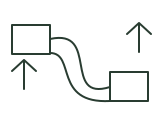
A line connecting two forest patches looks simple on a map. On the ground it may cross roads, farms and places where people work. Tiger conservation must reckon with habitat fragmentation and the availability of prey. A proposed connection therefore needs an explanation rooted in the landscape, rather than just a green arrow.
02 Look a little closer
Ask what evidence supports the route. Are animal movements documented, which obstacles matter, and what remains uncertain? A planted strip or a crossing structure may be part of a project, but its completion does not by itself establish that tigers can move safely between the intended areas.
03 Keep the context
People living beside a connection are participants with practical concerns. A credible account explains how their knowledge informs decisions, who responds when difficulties arise and how commitments are maintained. It should not treat a community meeting as proof that every household supports a plan or that conflict has been resolved.
04 A useful question
Follow the story after the opening ceremony. Monitoring should address use of the connection, continuing pressures and the conditions that sustain prey and habitat. Be cautious about headlines that turn one crossing photograph into population recovery. A corridor earns its meaning through a functioning landscape and lasting cooperation, not through its appearance on a brochure.
05 In practice
A connection needs to function at both ends as well as along its route. If the adjoining areas cannot sustain prey or face continuing disturbance, a mapped link alone cannot answer the wider conservation problem. Readers can ask how the project relates to protection and land management beyond its narrow boundary, and which partners carry those responsibilities. Movement evidence should be interpreted at the scale it supports: a recorded passage shows use at a particular place and time, while repeated observations may help address a broader question. Neither should be stretched into a claim about lasting genetic exchange or population recovery without suitable supporting research and an honest explanation of the remaining uncertainty.
06 A further perspective
Durability depends partly on agreements that survive changes in funding, leadership and local conditions. Who maintains a crossing feature, reviews a new development proposal or responds when residents report a problem? Those questions matter after the initial construction budget has been spent. Monitoring should also include a way to revisit the project’s assumptions and hear from people affected by its operation. Public information can explain that process without publishing sensitive animal locations. A credible corridor story is therefore unfinished by design: it follows whether the connection continues to serve its purpose and whether its costs and benefits are being addressed fairly, rather than treating a ribbon-cutting photograph as the final evidence of success.
An original editorial synthesis, not a veterinary protocol or an endorsement of any facility.